Experiment House
The Silver ChairExperiment House is the English school whose failure to restrain bullying frames Jill Pole and Eustace Scrubb’s departure into Narnia and their eventual return. Its supposedly permissive approach leaves a group of pupils free to intimidate others, while its headmistress treats offenders as psychological cases rather than imposing effective consequences. At the end of the story, Aslan’s intervention makes the school’s hidden disorder impossible to ignore: an inquiry exposes its practices, about ten pupils are expelled, and the school improves.
Setting and management
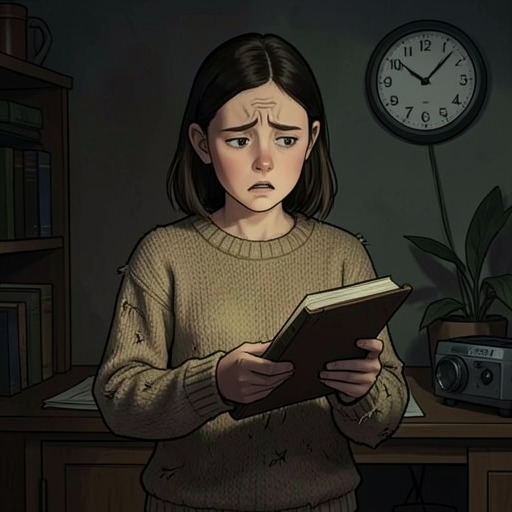
The narrative introduces Experiment House through Jill’s experience rather than through a description of its lessons. On a dull autumn day, she is crying on the damp path between the gym and the shrubbery because pupils have been bullying her. The school is co-educational, but the narrator’s account emphasizes that its governing principle is not ordinary supervision: those in charge believe boys and girls should be allowed to do what they like.
That policy has a concrete effect. Ten or fifteen of the biggest boys and girls favor bullying, and acts that would ordinarily have been discovered and stopped within half a term continue at Experiment House. Even when the authorities learn of them, the pupils responsible are not expelled or punished. The headmistress calls them interesting psychological cases and talks with them for hours; pupils who know what to say to her may become favorites instead. The distinction between the school’s stated permissiveness and its actual distribution of power is central: freedom for the powerful pupils means insecurity for everyone they target.
Bullying and the children’s escape
Jill and Eustace discuss the change others have noticed in Eustace. Jill reports that Eleanor Blakiston heard Adela Pennyfather describe him as “quite unmanageable this term” and say that the gang would have to “attend to him next.” Eustace shudders: at Experiment House, both children know what being attended to by the bullies means. The threat shows that the school’s violence is not an isolated episode involving Jill; the same group is prepared to turn on Eustace as well.
When a voice calls out that Jill is behind the gym and offers to fetch her, the two children duck beneath the laurels and scramble up the shrubbery slope to get away. The narrator observes that, although the school’s teaching methods leave pupils knowing little French, mathematics, or Latin, they do teach them how to get away quickly and quietly when the bullies are looking for them. The remark turns the school’s educational failure into an immediate matter of safety: evasion has become a practical skill its pupils need.
Their route leads to a high stone wall and a door opening onto the open moor, usually locked. The children have heard of occasions when it was open—or perhaps only one occasion—and that uncertain memory has kept them hoping and trying it. They reach it hot and grubby, bent low beneath the laurels, and find it shut. Eustace expects the handle to yield nothing; instead it turns, and the door opens. The school’s perimeter, meant to keep them within its grounds, becomes the threshold through which their adventures begin.
The return and confrontation
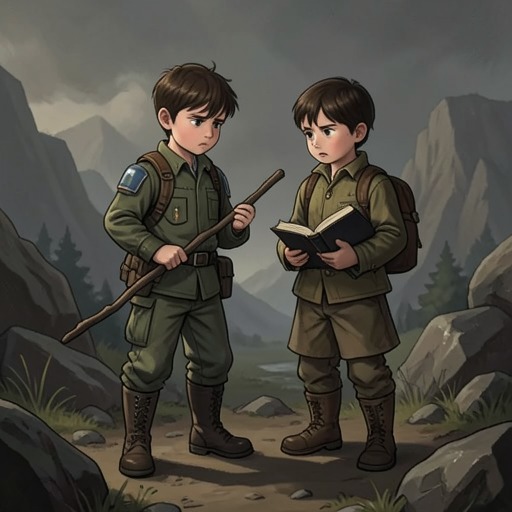
After their adventures, Jill and Eustace return to their own world with Caspian. Aslan tells them they must go back for a while and explains what awaits them at Experiment House, showing that he knows the school as well as they do. He gives Jill a switch that becomes a riding crop and tells the children to draw their swords but use only the flat, because the people they face are cowards and children, not warriors.
Aslan leads them through the wood until the wall of Experiment House appears. His roar brings down thirty feet of it, opening a view into the shrubbery and toward the gym under the same dull autumn sky present at the beginning of the story. The returning children and the changed wall make the school’s setting recur in altered form: the place where Jill had hidden and fled is now the scene of a direct confrontation with the people who made it unsafe.
The gang runs toward them, including Adela Pennyfather, Cholmondely Major, Edith Winterblott, “Spotty” Sorner, Bannister, and the Garrett twins. Seeing Aslan, the fallen wall, and the three figures in bright clothes with weapons changes their faces; the narrative describes the meanness and cruelty giving way to terror. With Aslan’s strength, Jill uses the crop against the girls, while Caspian and Eustace use the flats of their swords against the boys. The bullies flee, crying that it is unfair and calling out about a lion and supposed fascists. The intervention reverses the earlier imbalance: the gang can no longer use its numbers and the school’s inaction to pursue the children without consequence.
Exposure and reform
The headmistress runs out, sees the lion, the broken wall, and the armed children, and fails to recognize Caspian, Jill, and Eustace. She returns to the house in hysterics and telephones the police with a story about a circus lion and escaped convicts. In the commotion, Jill and Eustace quietly go indoors and change from their bright clothes into ordinary ones; Caspian returns to his own world. At Aslan’s word, the wall is made whole again.
When the police arrive, they find no lion, no broken wall, and no convicts, while the headmistress appears to them to be behaving irrationally. The ensuing inquiry uncovers what has been happening at Experiment House, and about ten pupils are expelled. The investigation supplies the institutional reckoning that the headmistress’s conversations and the school’s non-punitive policy had failed to provide. Her friends decide she is no use as a head and arrange for her to become an inspector; when she proves ineffective in that role too, they get her into Parliament.
The children’s return also has small, lasting material traces. Eustace secretly buries his fine clothes in the school grounds, whereas Jill smuggles hers home and wears them to a fancy-dress ball the following holidays. More consequentially, Experiment House changes for the better and becomes quite a good school. Jill and Eustace remain friends. The school’s ending thus contrasts with its opening: the place that had left bullying unchecked becomes safer after its failures are publicly exposed and its practices change.